Battery Simulator
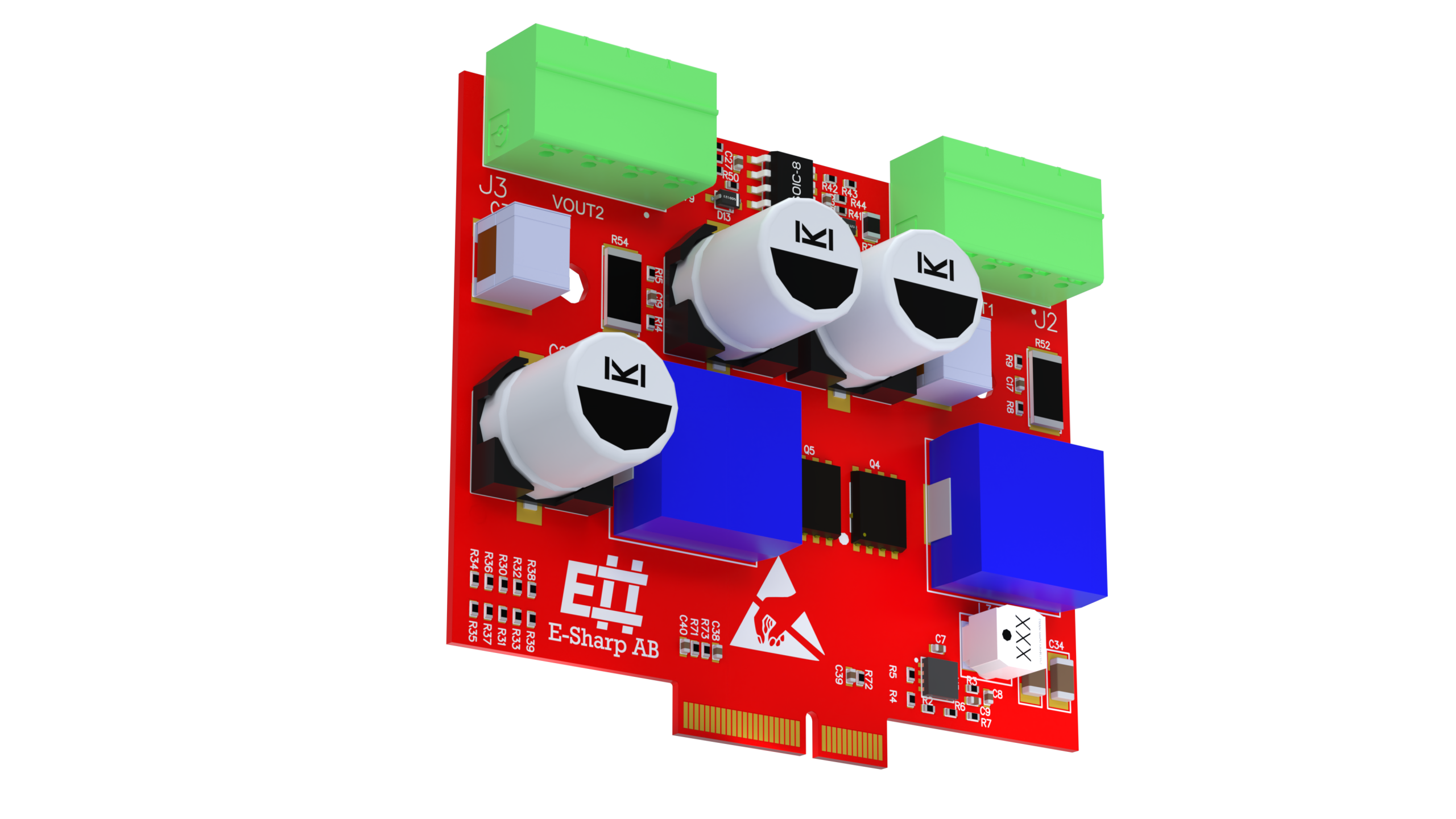
Programmable battery emulation — 0–10 V at 1 A bidirectional, galvanically isolated, with on-board measurement and protection.

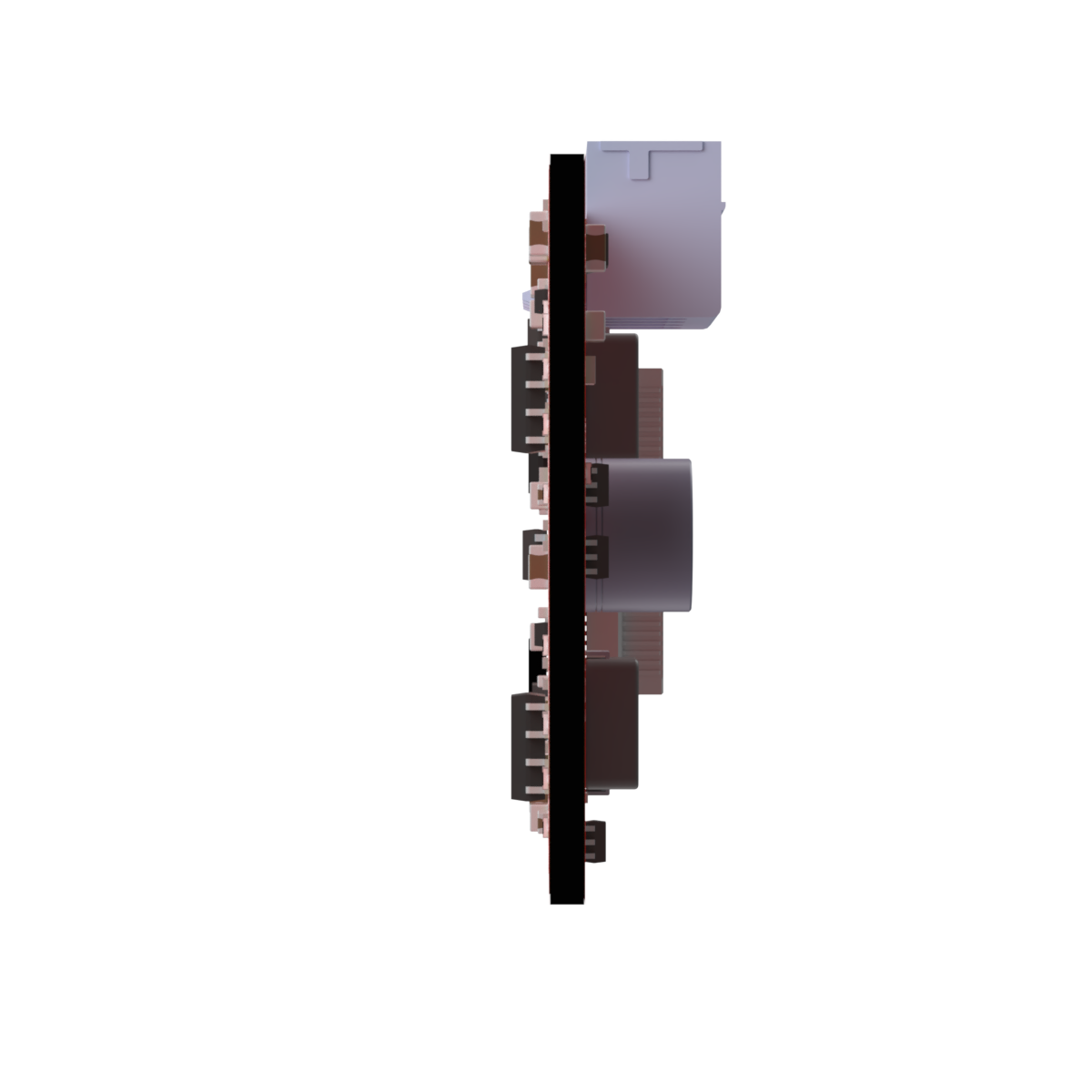

Part of the Accordion test system — modular, scalable, programmable.
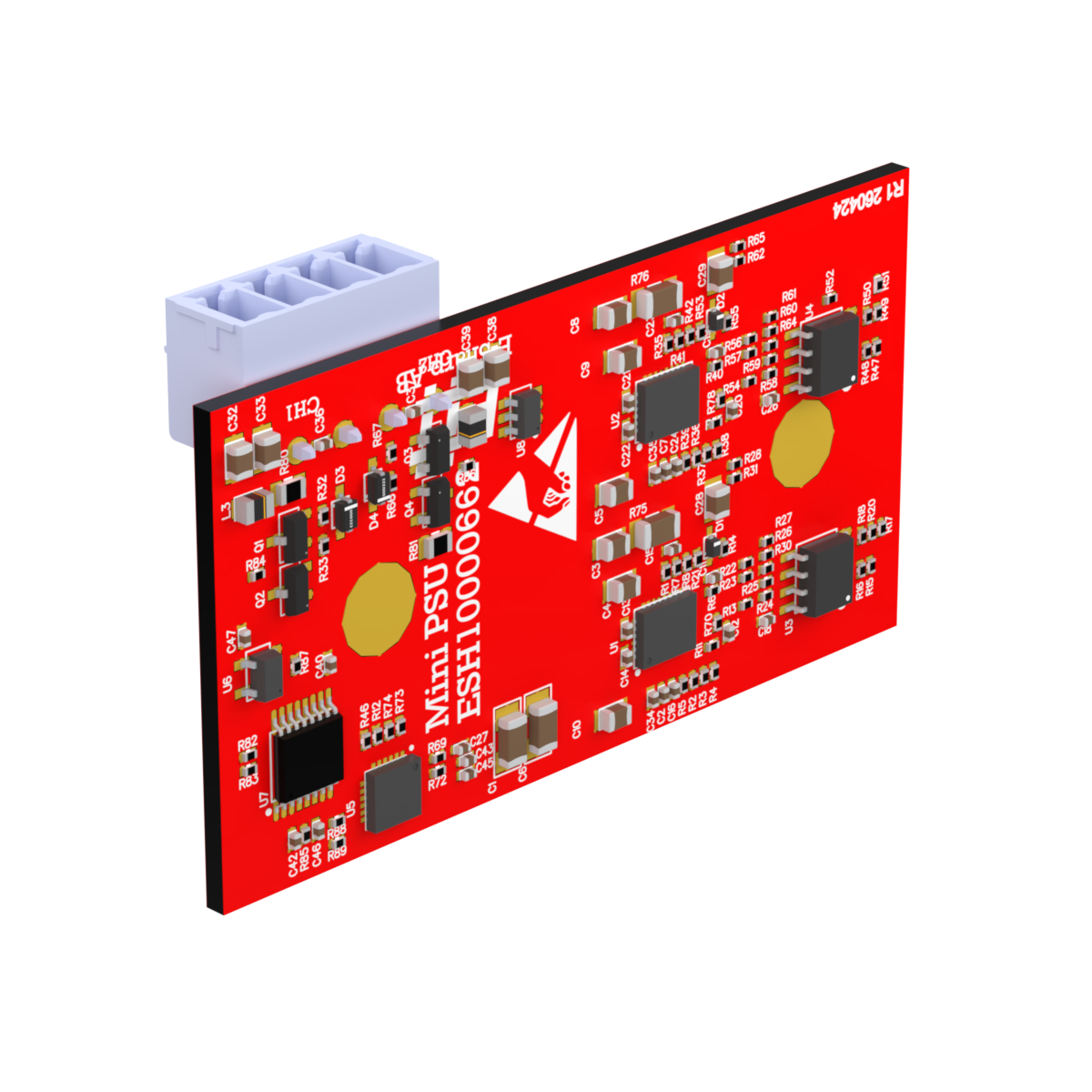
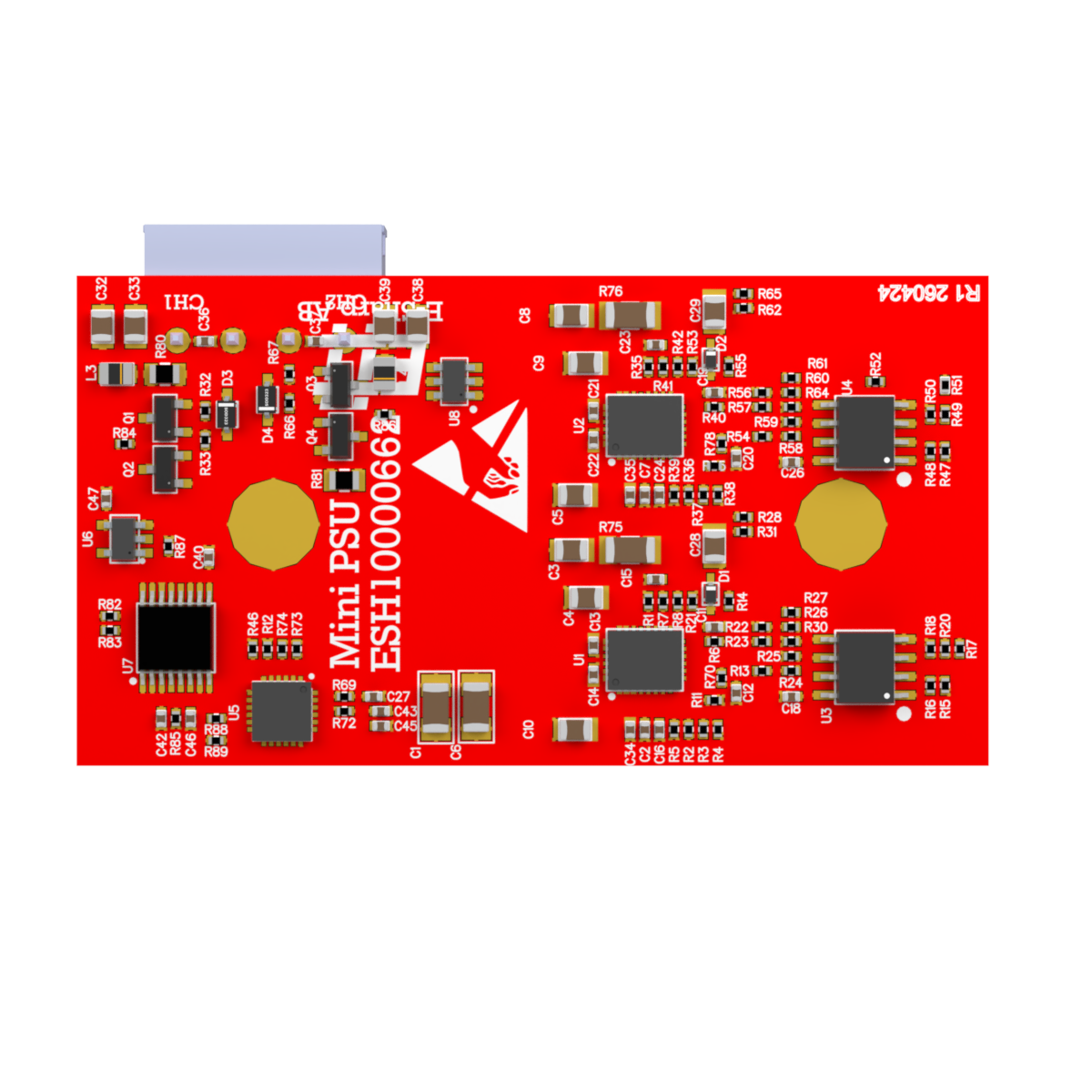
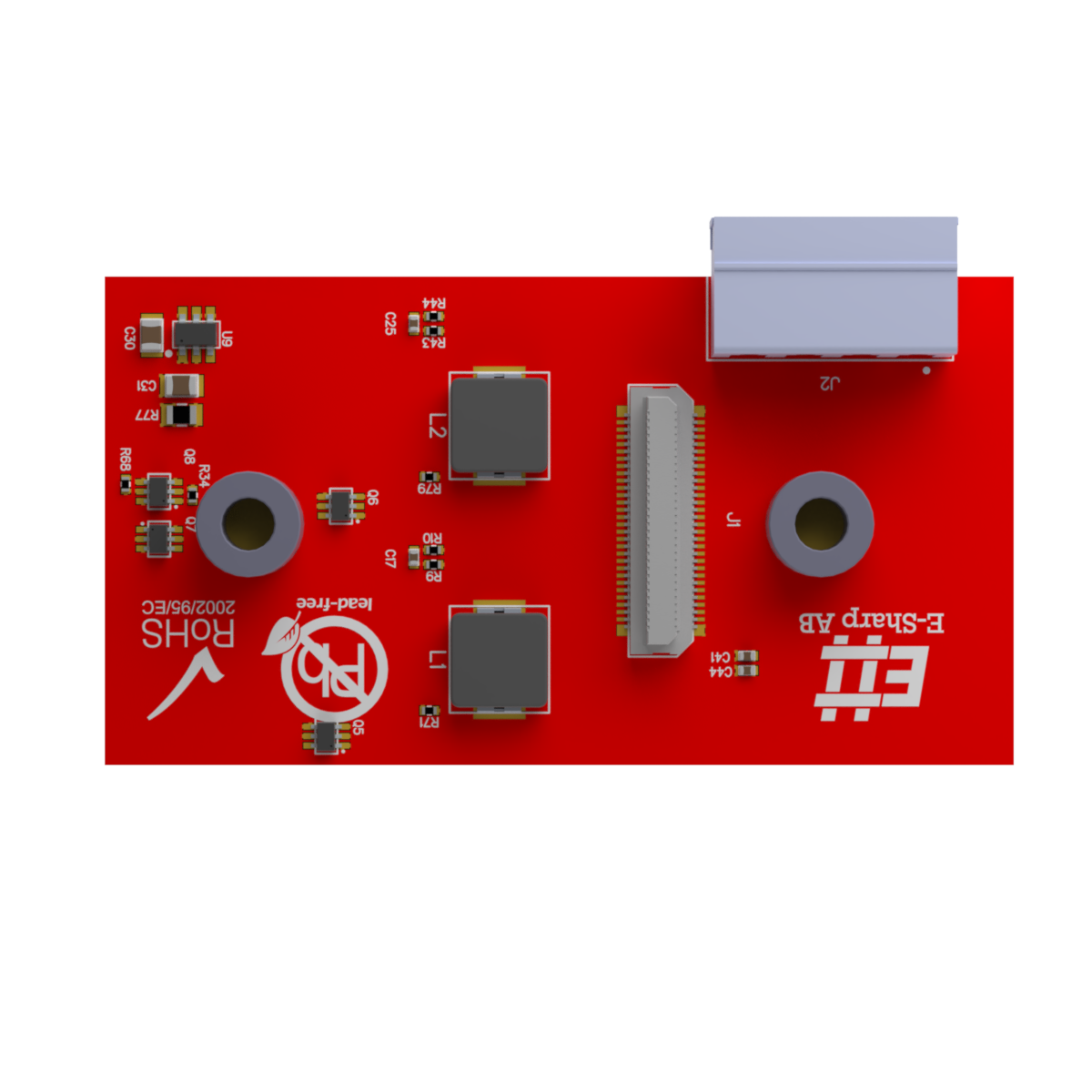
The Mini-PSU is a two-channel programmable buck-boost power supply for the Accordion test system, built as an N-Top module that mounts directly on top of the Accordion frame. Each channel delivers an independent 0–24 V output at up to 1.5 A with its own programmable current limit, and runs entirely over I²C — voltage setpoint, current limit, enable, PWM, and read-back of actual output voltage and current all share the same bus. No per-channel analog control lines to wire into the fixture.
The buck-boost topology — built around an LT3942 4-switch controller per channel running at ~980 kHz — lets the Mini-PSU regulate output voltages both above and below the input rail. That removes the usual headroom margin you have to budget for a buck-only design, and means the same module can power a 3.3 V DUT and a 20 V auxiliary rail off the same input supply.
Each channel has its own programmable current limit, set via DAC. Constant-current mode engages automatically when the load reaches the configured limit, with current-limit linearity better than ±0.1 % of full scale (1.5 A). That makes the Mini-PSU usable as a programmable current source as well as a voltage source — handy for biasing, soft-starting capacitive loads, or simulating a current-limited supply for the DUT.
Output voltage and output current are read back through the same I²C interface (VMON via a resistor divider into an on-board ADC, ISMON via the LT3942’s buffered current monitor). That is fast enough to use inside a closed-loop control routine or a pass/fail check in an automated test sequence, without bolting a separate DMM into the fixture.
Protection is built in: input UVLO at 16.7 V rising / 14.7 V falling, input OVLO at 29.6 V rising / 28.7 V falling, output OVP at 29.4 V, and a soft-start ramp of ~1.76 ms on enable. Faults keep the converter running rather than latching off, so a transient input dip will not trip the fixture into a manual reset.
Trade-off to flag: at 1.5 A per channel the Mini-PSU is sized for low-to-mid-power DUTs and auxiliary rails, not for powering a high-current load. Use a different supply for tens of amps of work.
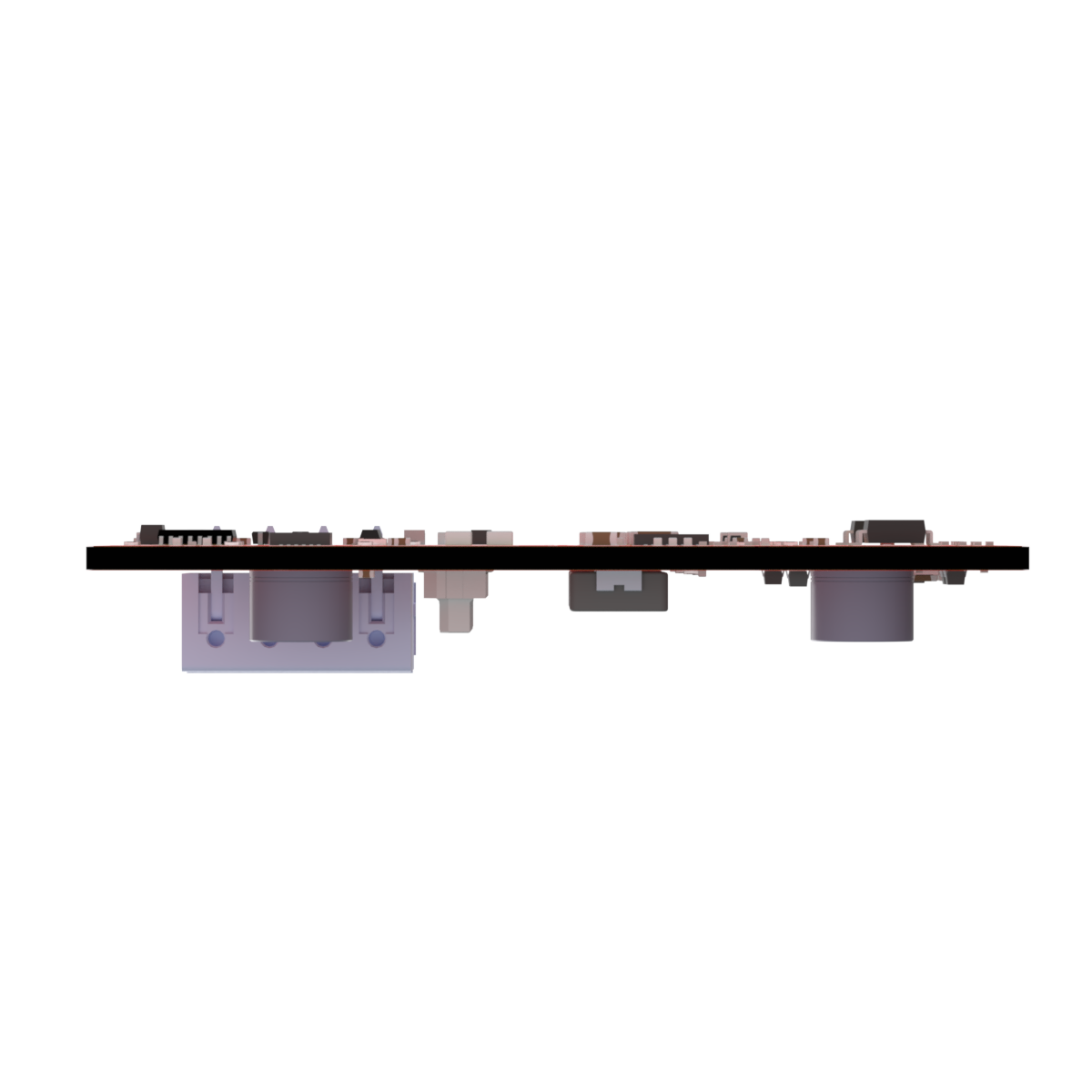
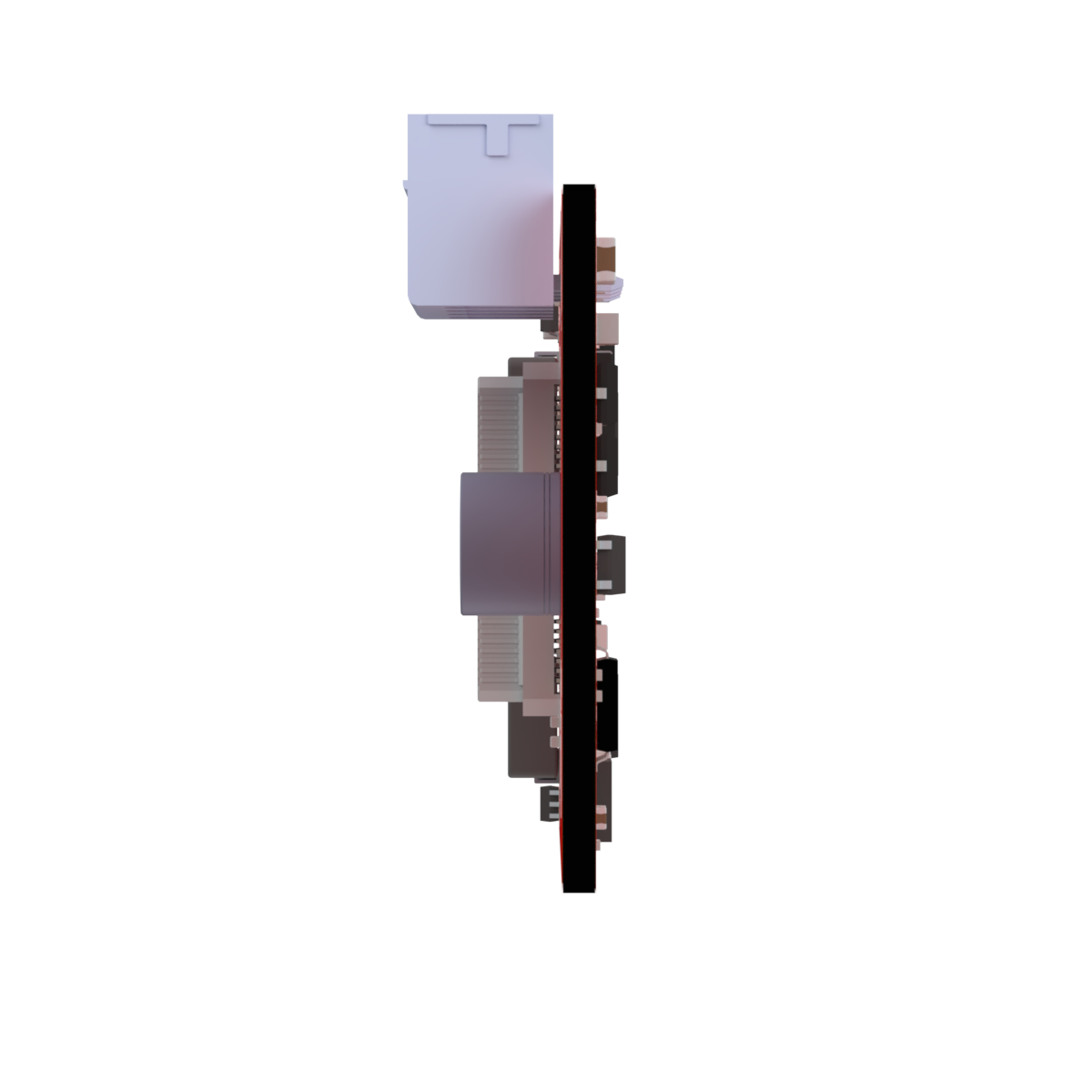
The Mini-PSU mounts on top of the Accordion test system as an N-Top module, freeing the slots inside the chassis for other modules. It is fully controlled over the I²C bus exposed across the platform — both channels and all auxiliary control (per-channel active-low enable, per-channel PWM input, voltage/current monitor read-back) live on that single bus, with two on-board devices: an AD5593R 8-channel DAC/ADC for the analog setpoints and monitors, and a PI4IOE5V6416 GPIO expander at I²C address 0x20 for the digital control lines.
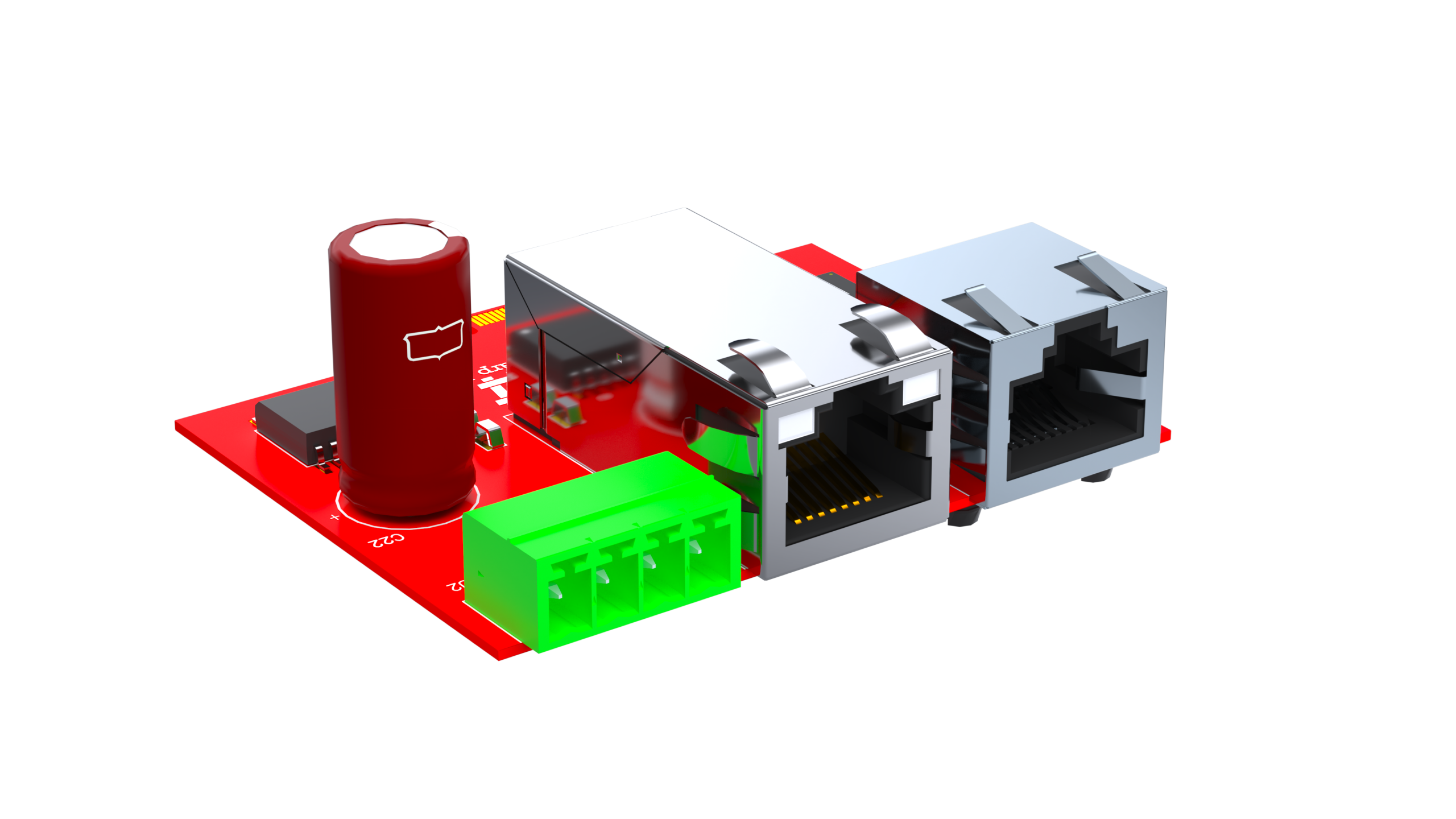
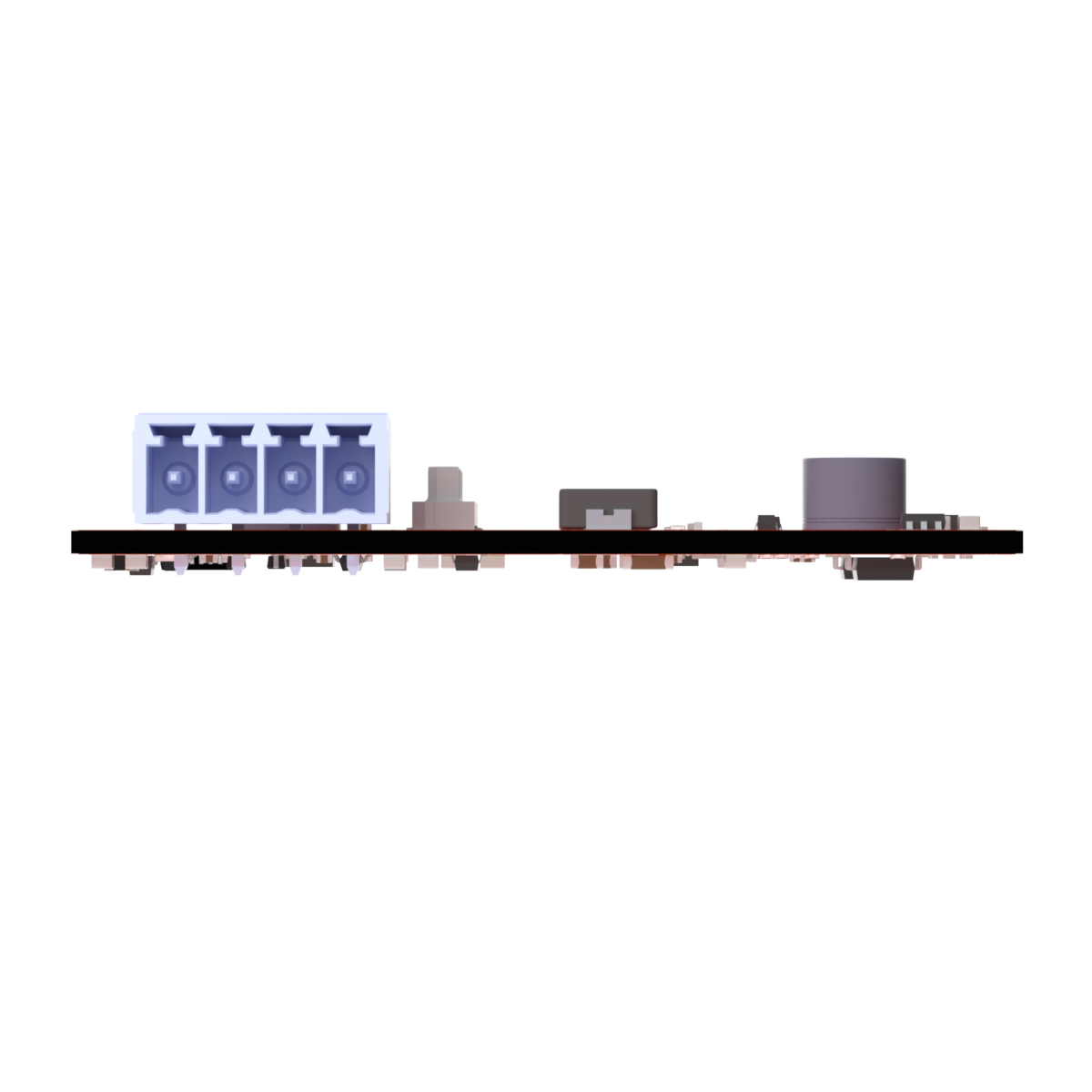
Output is broken out on a 4-pin Phoenix connector (J2): VOUT1, GND, GND, VOUT2 — a layout that keeps the two channels isolated from each other on the wiring side and gives a return pin between the two outputs to keep coupling low.
Controlled via the Accordion API — C#, Python, TestStand, LabVIEW.
Full electrical specifications, the I²C device map, VSET / ISET / VMON / ISMON control reference, GPIO-expander init sequence, protection thresholds, and the J2 output-connector pinout are maintained in the E-Sharp Help Center. See the Mini-PSU reference.
Full electrical specifications, the I²C device map, VSET / ISET / VMON / ISMON control reference, GPIO-expander init sequence, protection thresholds, and the J2 output-connector pinout are maintained in the E-Sharp Help Center. See the Mini-PSU reference.