Design verification
Design verification for thermal and high-reliability hardware
We prove your hardware holds up under real-world conditions — thermal cycling, burn-in and long-term reliability. In-house climate chambers and custom rigs do the physical work; Accordion captures the data and Maestro authors the sequences. Our focus is thermal and datacenter-class hardware, where the margins are thin and failures are expensive.
In-house climate chambers & custom rigs • Proven on datacenter and thermal-critical hardware
What we verify
Does it hold up when it matters?
Verification is where a design meets reality. We define what “good” means, build the setup to measure it, and run the evaluation — short bursts and long soaks — so you know the product performs before it reaches production.
Thermal verification
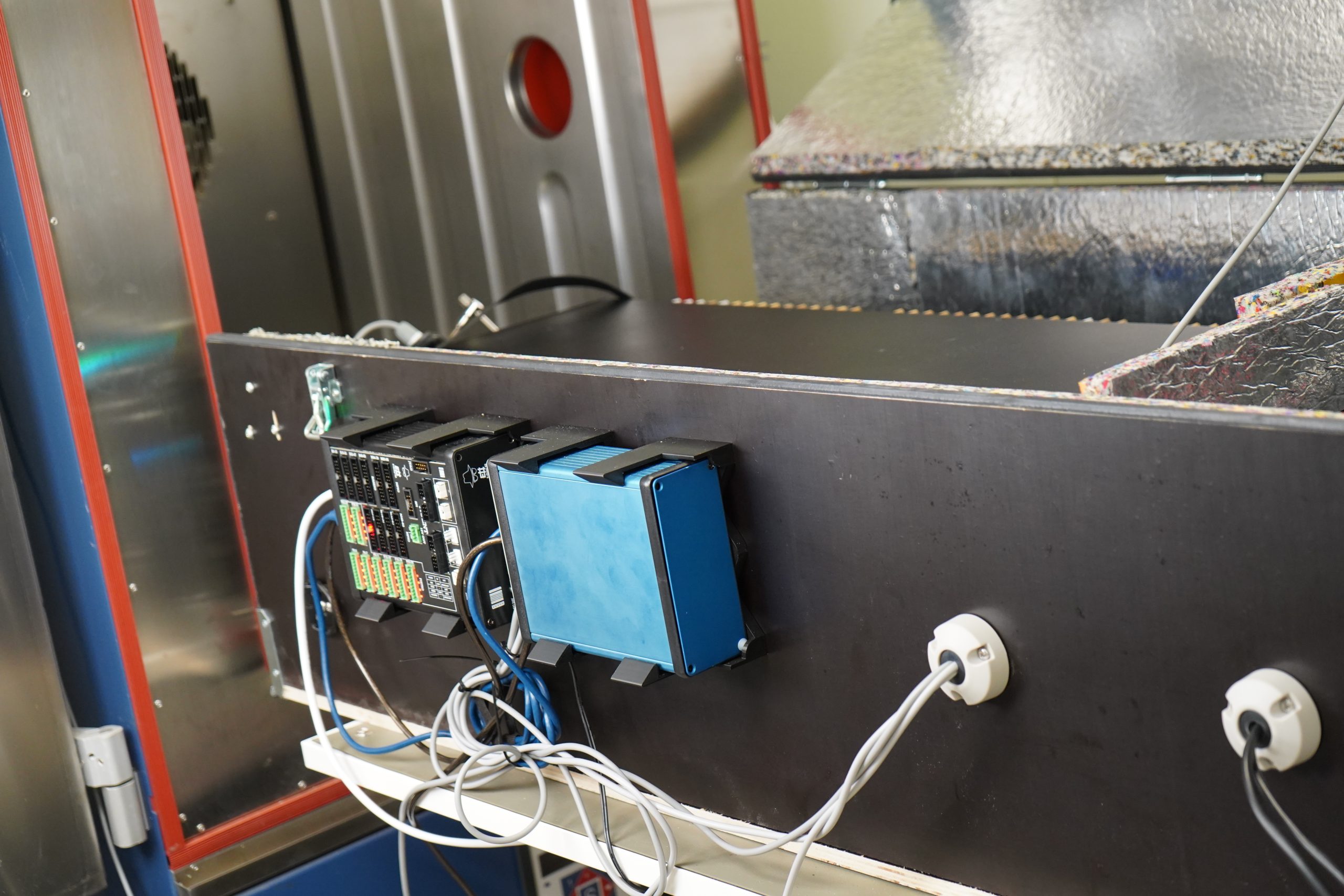
Thermal cycling and hot/cold margin testing in our own climate chambers — validating the thermal path, derating and behaviour at the temperature extremes the product will actually see.
Burn-in & long-term reliability
Extended stress and soak testing to surface early-life and wear-out failures before your customers do — the difference between a board that works and one that keeps working.
Datacenter & high-complexity
Dense, high-power, high-signal-count hardware where verification is hard to instrument. We’ve done it — including a multi-year datacenter programme — so the setup is realistic, not theoretical.
Why E-Sharp
We build the rig, then run it
Most labs measure what you hand them. We do the harder part too: we design and build the verification setup — custom fixtures, chamber configuration, instrumentation — and then run the evaluation on it. Because the rig and the measurement come from the same team, the test actually reflects how the product works, and the data is clean enough to act on.
The tools are our own. Accordion handles data acquisition and logging; Maestro authors the test sequences. That’s the same toolchain behind our functional test development — so verification data carries straight into production test if you take the product further with us.
Chambers and rigs, in-house
Real conditions, not a spreadsheet model
Simulation gets you part of the way; hardware tells you the truth. Our workshop has climate chambers, custom mechanical fixtures and the instrumentation to drive them — so we can subject a real board to real thermal and electrical stress, not just predict how it should behave.
And because the same engineers who design fixtures and electronics run the tests, a strange result gets investigated on the spot instead of bounced back as a question.
Evidence you can act on
Structured data, not a folder of logs
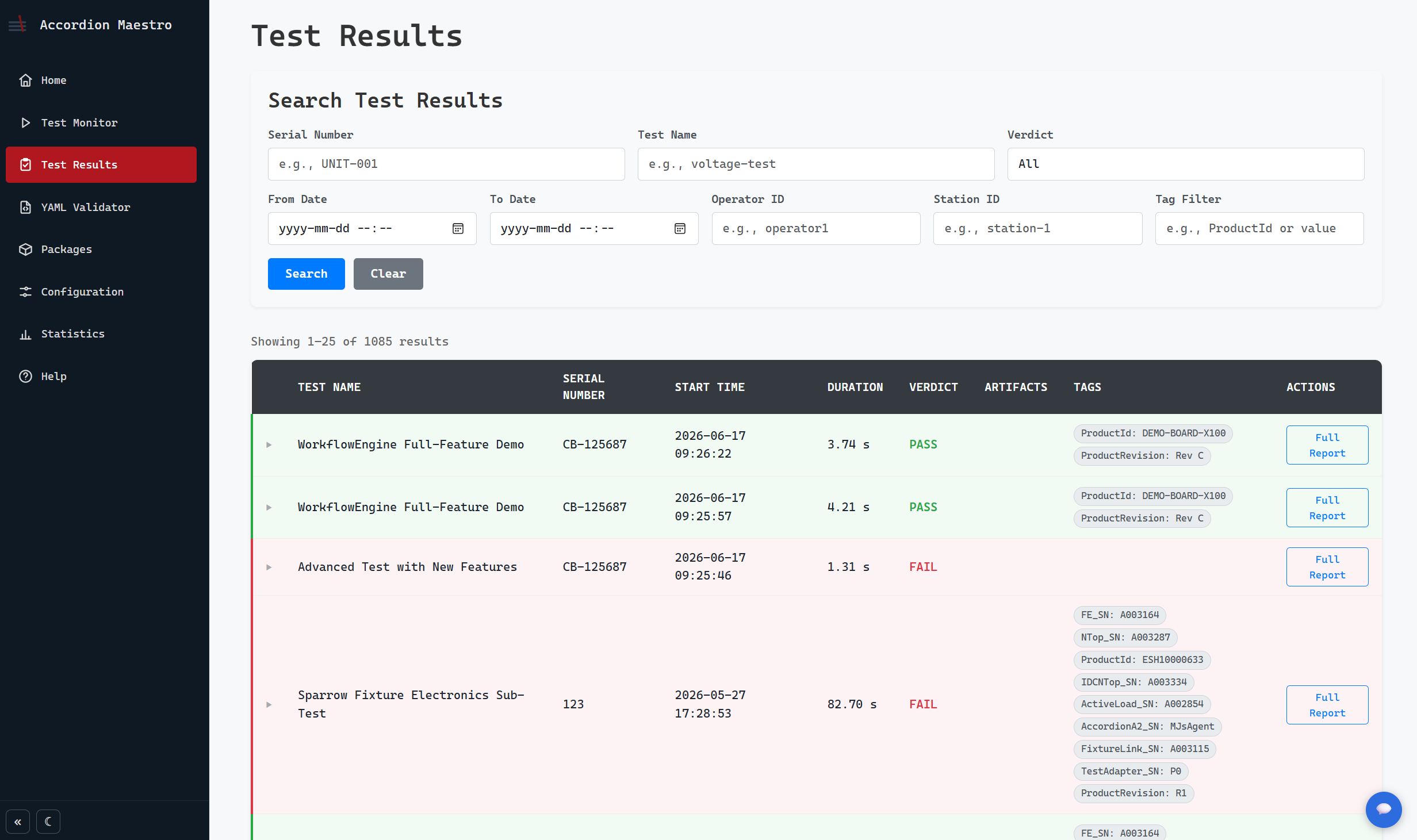
Every measurement is captured on Accordion and stored structured and queryable, with the test sequences authored in Maestro. So drift, outliers and marginal behaviour are visible across runs and units — and you get a report that shows the evidence, not just a verdict.
It works alongside your existing instruments and process — you don’t replace your lab to get results you can trust.
How we work
From a verification goal to evidence
A clear path, with you involved throughout — you always know what’s being tested and why.
Define goals
We agree what to verify, the conditions and the pass/fail criteria — grounded in how the product is actually used.
Build the setup
Custom fixtures, chamber configuration and instrumentation — the rig that makes the test realistic.
Author sequences
Test sequences written in Maestro, with data capture on Accordion set up from the start.
Run & evaluate
Short-term and long-term evaluations — thermal, stress, soak — with results logged as we go.
Report
A report with the evidence, what passed, what didn’t, and what we’d recommend before production.
What you get
Proof, documented
Scope is agreed up front and set in the quote. A typical verification engagement delivers, for example:
- Verification plan & criteria
- Custom rigs & fixtures
- Thermal & stress test results
- Structured measurement data
- Pass/fail evidence per unit
- Findings & recommendations
Selected work
Verification we’ve run
From thermal-critical boards to datacenter-class systems under sustained stress.
When this fits
Honest scoping
A good fit when you…
- Need to prove thermal, burn-in or long-term reliability before committing a design to production.
- Are building datacenter, high-power or high-complexity hardware where verification is hard to instrument.
- Want one team to both build the test rig and run the evaluation — with clean, structured data at the end.
- Have a board designed elsewhere and just need it verified — this is a standalone service.
Not the right partner if you…
- Need production test stations to ramp volume — that’s functional test development.
- Want the full product designed — that’s product design.
- Need formal regulatory/EMC certification — we verify performance, we’re not an accredited certification lab.
- Just need a quick functional check with no thermal or reliability dimension.
Frequently asked
Questions we get early
Can you verify a board we designed ourselves?
Yes — design verification is a standalone service. We regularly verify hardware designed elsewhere. We’ll define the verification goals with you, build the rig and run the evaluation, whether or not we did the design.
What conditions can you test?
Thermal cycling and hot/cold extremes in our in-house climate chambers, burn-in and long-term soak, and electrical stress under load. We build custom fixtures and rigs for the specific board, so the test reflects real operating conditions rather than a generic profile. Tell us the environment the product will see and we’ll scope the setup to it.
How is this different from functional test development?
Verification answers “does this design meet its spec under real-world conditions?” — it’s about proving the design before production. Functional test development is about the production test system that checks every unit as it’s built. Same toolchain (Accordion, Maestro), different question — and verification data carries straight into production test if you take the product further with us.
What does it cost?
Every engagement is scoped and quoted. Cost is driven by the conditions, how much custom rig and fixturing is needed, and the length of the evaluation. The fastest way to a number is to send us the board and the conditions you need it verified against.
Get started
Prove it before you ramp
Book a 30-minute call or send us a message first. Tell us the board and the conditions it has to survive, and we’ll tell you honestly how we’d verify it.