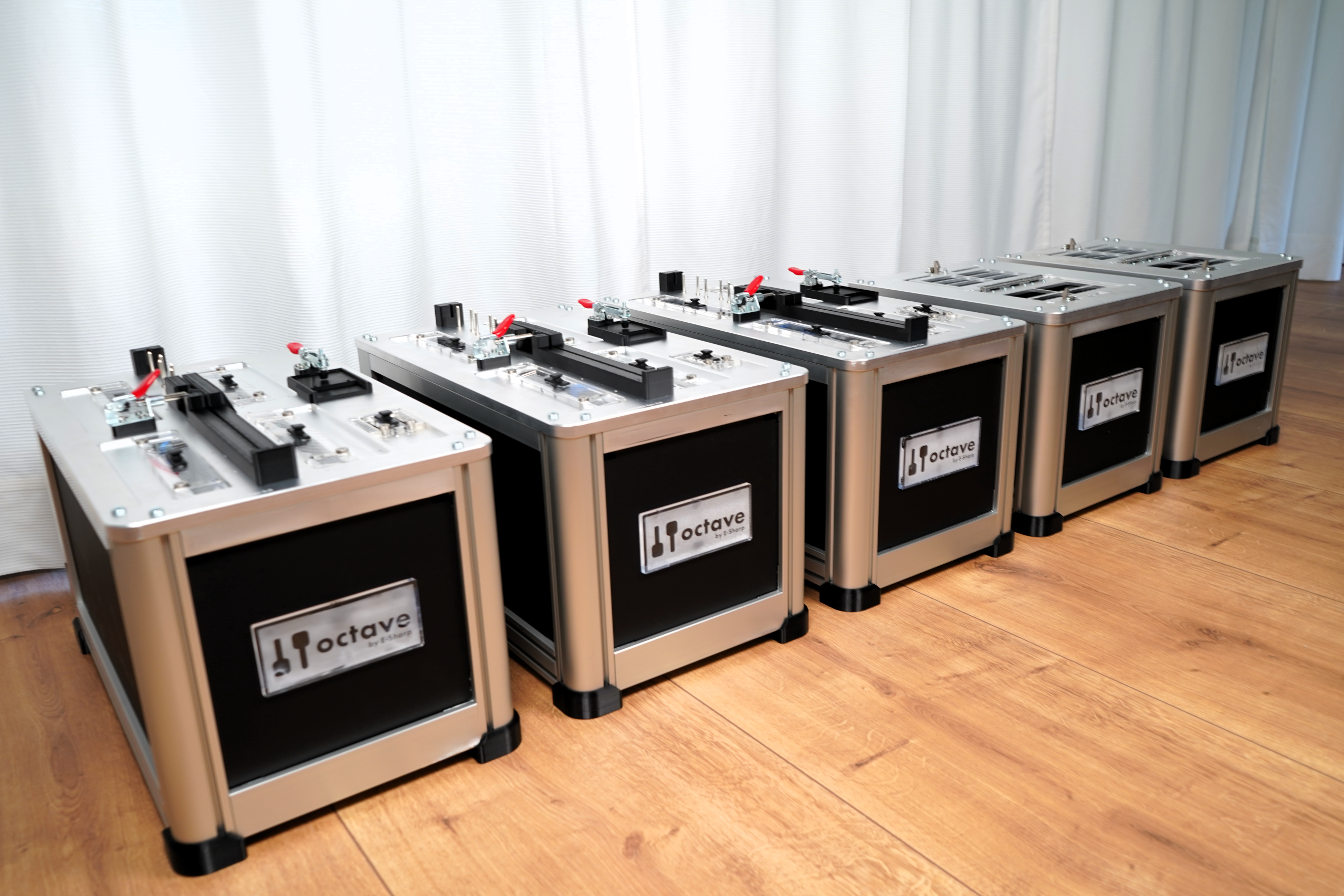
Hardware · Test fixture
Octave parametric test fixture
A parametric test fixture with the test instruments and a PC built in — a self-contained station that resizes to your DUT, adjustable in width, depth and height.
Parametric frame • Instruments & PC built in • Stackable for storage
What it is
One fixture concept that resizes to the DUT
Octave is a parametric test fixture built for the Accordion test ecosystem. Its frame adjusts in width, depth and height, so one fixture concept fits DUTs of very different sizes — with the test instruments and a PC built in, so each unit is a self-contained test station rather than a fixture wired out to a rack.
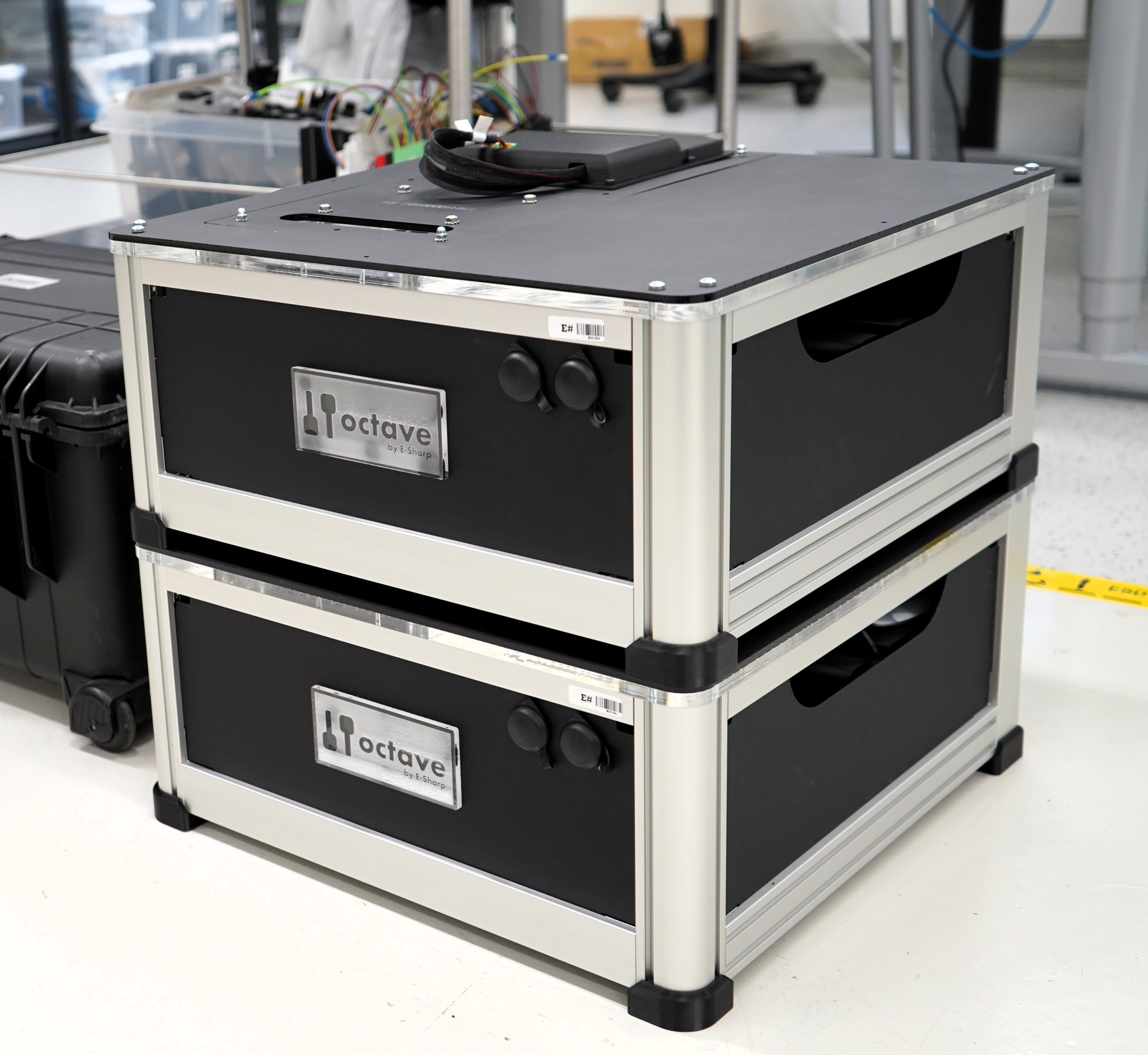
You run it like a workstation: network, keyboard and mouse plug into connectors on the station. And because the units stack, they take up less space when stored or moved between benches.
- Type — parametric functional-test fixture
- Instruments — Accordion built in, plus an on-board PC
- Station I/O — network, keyboard and mouse via connectors
- Adjustable — width, depth and height
- Stacking — stacks for compact storage
- Top plate — custom, designed to your DUT
- Interfaces — USB, network and HDMI
Built to adapt
One frame, many boards
Octave is sized and configured to your DUT rather than rebuilt for it — which is what makes it quick to move from one board to the next.
Parametric frame
Adjustable in width, depth and height, so one concept fits DUTs of very different sizes.
Self-contained station
The instruments and a PC are built in; connect network, keyboard and mouse via connectors on the station.
Stacks for storage
Units stack so they take up less space when stored or moved between benches.
Photo examples
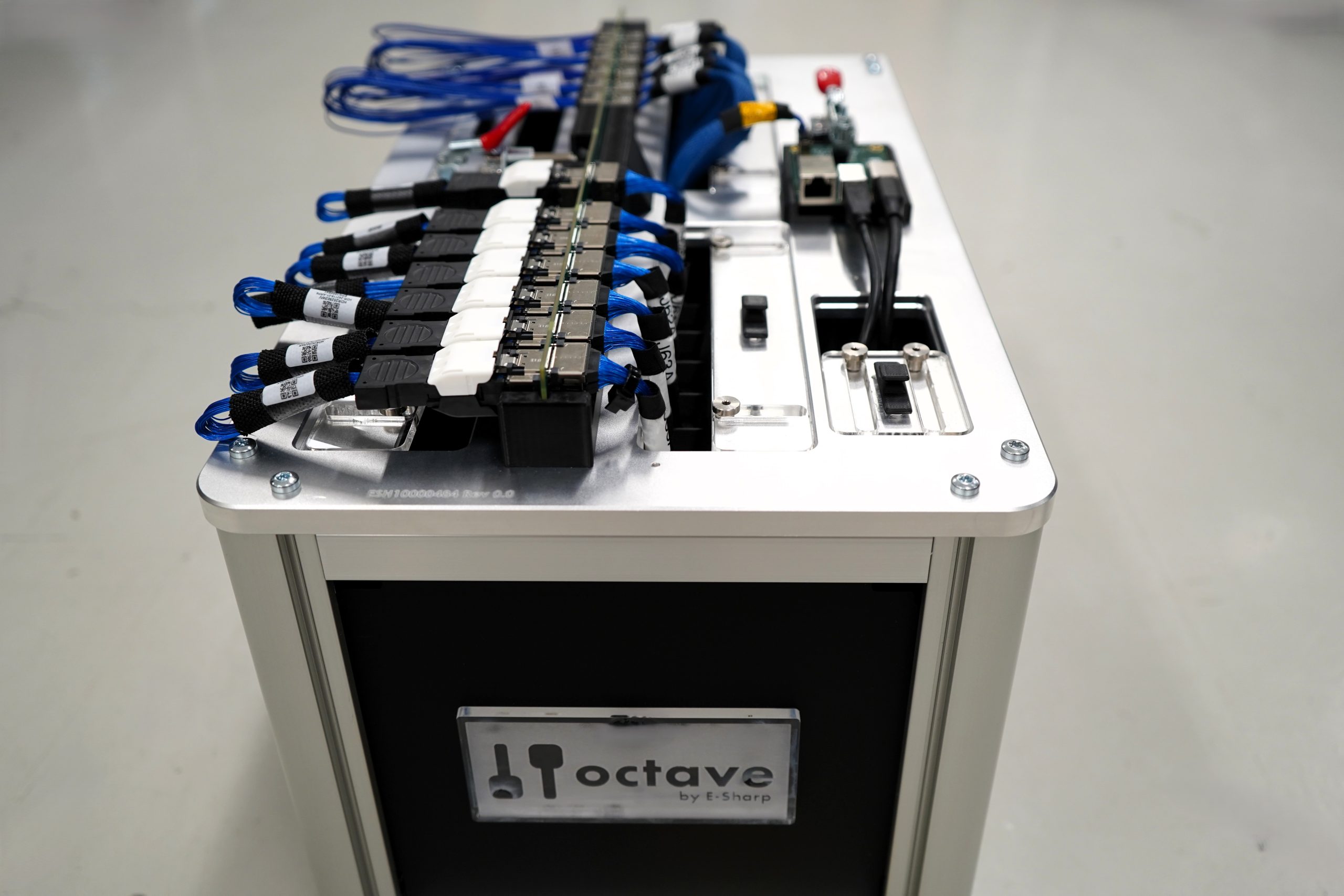
Configured to each DUT
A self-contained station
Instruments and a PC, built in
The test instruments and a PC are built into the fixture, so each Octave is a complete station rather than a fixture you wire out to a rack. You run it like a workstation: network, keyboard and mouse connect through connectors on the station.
Octave contacts the DUT through a custom top plate rather than a bed of nails, so it fits design verification, NPI and connector- or edge-contacted boards. For high pin count or repeatable, higher-volume contacting through a bed of nails, use Harmonix.
Inside the fixture
Built on Accordion, orchestrated by Maestro
The instrument layer inside Octave is Accordion: one chassis replaces five to eight separate instruments — DMM, programmable PSU, active load, DAQ, PoE, bus master — driven from a single API in Python, C# or TestStand. The same test code runs from design verification through NPI to production, orchestrated by Maestro.
So the fixture is a complete, self-contained test node — not a mechanical shell you still have to instrument.
Where it fits
Typical use
DV & bring-up
Design-verification bring-up and characterization where the DUT or contacting still changes.
NPI benches
New-product benches that need to be reconfigured through development, not rebuilt.
Connector-contacted boards
Design-verification and NPI boards that don’t need a bed of nails.
Compact storage
Units stack, so they take up less space when stored or moved between benches.
Instruments built in
A self-contained station — Accordion and a PC inside the fixture, one API.
Custom contacting
Top plate and connector adapters designed and built to your DUT under one roof.
Octave is configured to your DUT and delivered as part of an E-Sharp functional-test / NPI engagement.
Delivered within our engagement
Octave comes as part of functional test development
We don’t sell Octave on its own — it’s the fixture layer of a complete test system we design and build for your product, from contacting to instruments to analysis-ready data. See how the engagement works.