Functional test & NPI
Functional test development for new electronics
We develop the test strategy, fixtures, stations and software that take new electronics — PCBAs and complete assemblies — from prototype into production. Supported by proprietary tools for test development, data management and production deployment.
50+ years combined test-development experience • 100+ test stations delivered
What we do
Functional test development, built on Accordion
Functional test, custom fixtures, automated stations and precise data capture, built on our Accordion platform: modular, repeatable, traceable, with fast changeover. Around that core, we cover the rest of the production window.
Test strategy & specification
What to test and how — DFT input, coverage, measurability. Our Probe tooling reads netlist, per-pin function, datasheets and BOM, so we understand the board fast and the spec lands sooner, with fewer iterations.
Test fixtures, adaptation cards & test adapters
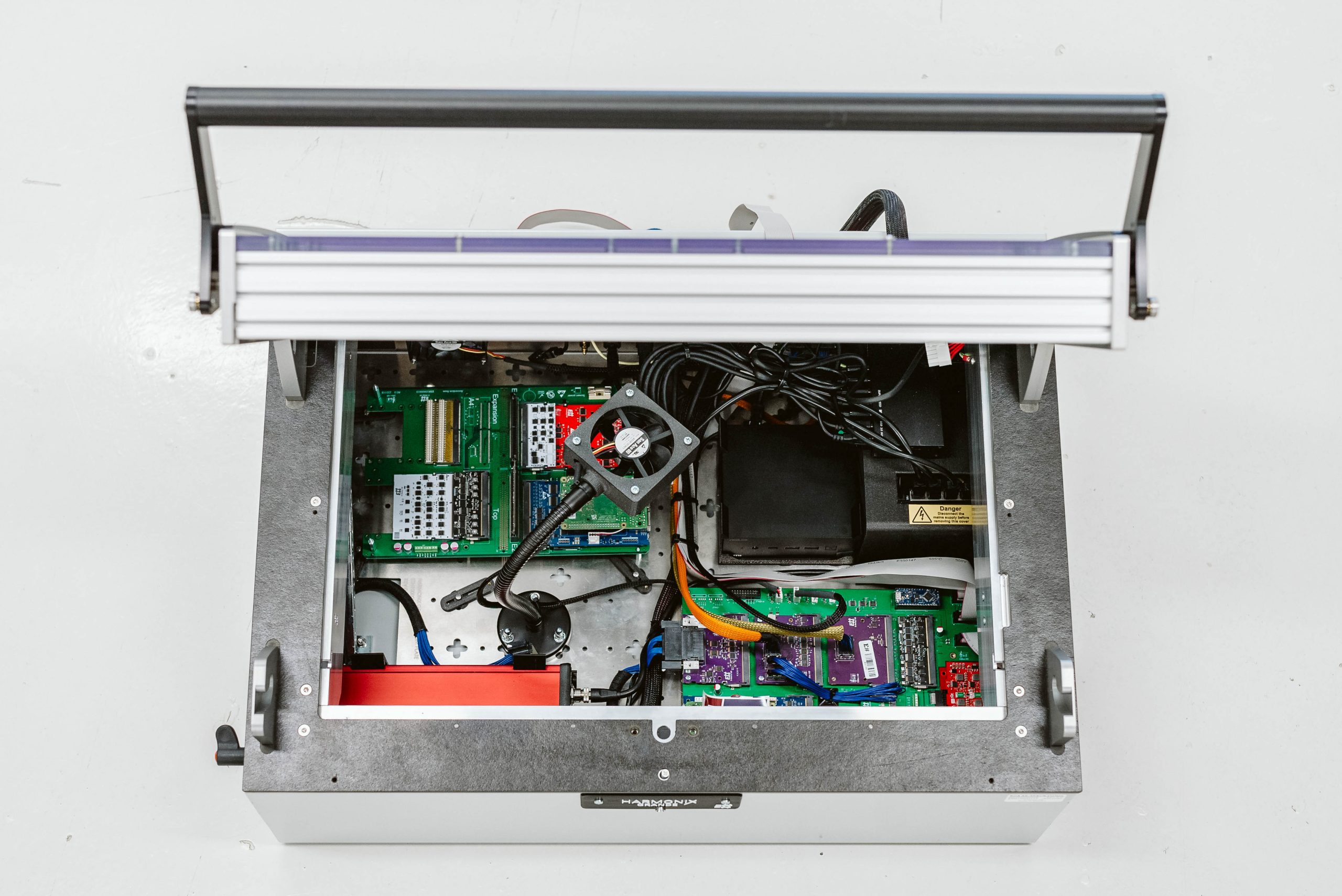
We design and build both the mechanics and the electronics of the fixture in-house — adaptation cards and test adapters on our own SMT line, plus our Octave and Harmonix concepts for measurement-heavy needs.
Structured test data & analysis
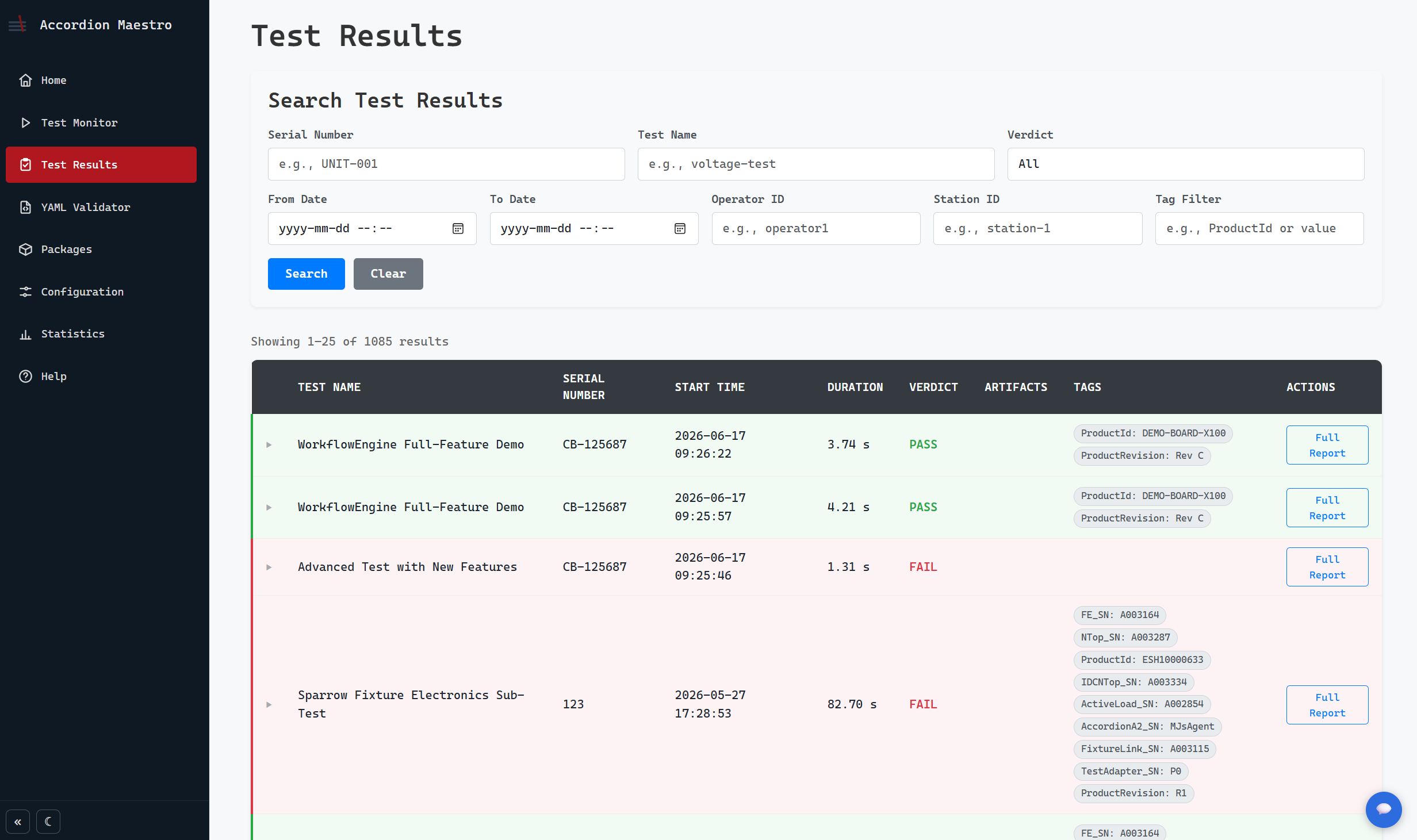
Test runs on Maestro, which stores data in structured form instead of log files. That gives you fast, powerful analysis of your test data — and keeps it ready for AI.
Scale to volume & support
Multi-site rollout, capacity scaling, maintenance and ongoing test-system support. In addition, the same platform runs across geographically distributed factories.
Why it’s faster with E-Sharp
Weeks of test engineering, saved — with Probe and Maestro
Probe reads your ODB++, schematic and BOM and pulls the datasheets, so we reach a test specification fast — and your engineers spend less time answering questions about their own product. Then the big one: Maestro writes the test sequences from that specification — the work that usually takes weeks. As a result, fewer iterations and fewer hand-offs.
So you’re not really buying a test station — you’re buying a shorter ramp-up, fewer production problems, less load on your team, and lower project risk.
Our time savings are your cost savings.
Designed and built under one roof
One partner, the whole test chain
Most test suppliers outsource fixture build. Instead, we keep design and manufacture together — mechanics, adaptation-card electronics and assembly — so iteration is faster, traceability is complete, and there is no supplier hand-off where things slip.
Behind the test sits a full engineering team: electronics, mechanics, FPGA, software and thermal. When the test points at a design problem, we can follow it instead of stopping at the spec.
Data you can actually use
Structured data, not log files
Every measurement is stored structured and queryable from the first run — so yield, drift and failures are visible across designs and sites, and the data is ready for analysis and AI. But where log-file quality tools stop, structured data continues.
And it works alongside your existing instruments and process, so you don’t have to replace your stack to get analysis-ready data.
How we work
From your design to a running test station
A clear path — and you’re in the loop the whole way.
Startup
We align on what the test station needs to cover and gather the inputs — your design, schematic, BOM and requirements.
Implementation proposal
The test specification, how the station will be built, which tests it runs, and a time estimate — for your sign-off.
Development
Test software and the test rig — fixtures, adaptation cards, station — designed and built.
Delivery
Commissioned and handed over — we help you get the station running on the factory floor.
Support in production
We stay with you — supporting, maintaining and scaling test as volume grows.
The problem
Sound familiar?
When a new product is cleared for production, test is what slows the ramp — and a small team gets stuck.
- Fixtures and stations tie up test engineers you don’t have to spare.
- One-off rigs are expensive to scale and hard to move between sites.
- Test data ends up in log files — no clear view of yield across designs and sites.
Why E-Sharp
What makes the test better, not just built
A platform, not a one-off rig. Built on Accordion — modular, repeatable, traceable — it scales with you instead of starting over each project.
We understand your product faster. Probe reads netlist, per-pin function, datasheets and BOM, so test development is quicker and more accurate.
Structured data, not log files. Maestro stores test data structured from the start — analysis-ready and AI-ready.
Real engineers behind the test. Electronics, mechanics, FPGA, software and thermal under one roof — so strategy is real, not theoretical.
Proven at complexity and scale. Advanced datacenter systems and a five-year partnership to deliver 200+ test systems. High-mix, high-complexity, multi-site.
Founder-level depth. Our founders spent decades in NPI, test and FPGA for the most demanding silicon-adjacent hardware before E-Sharp.
By the numbers
Proof, not adjectives
Case studies
Test stations we’ve built
From high-complexity multi-site systems to fast, focused single stations.
What you get
Delivered, and agreed up front
Every delivery is scoped in the quote, so we stay flexible. For example, a typical delivery includes:
- Test station(s)
- Adaptation cards
- Test software & test sequences
- Documentation & test description
- Operator instructions
- Maintenance instructions
Optional, on request: CAD / mechanical files, service agreements, and anything else your process needs — all agreed in the quote.
When this fits
Honest scope
A good fit when you’re…
- In serial production — from a few hundred boards a year for complex products, or low thousands for simpler ones.
- Running higher volumes across several operator-loaded stations — the scale of our five-year, 200+ system partnership.
- Building high-mix or high-complexity hardware where standard rack-and-stack doesn’t fit.
- Across industrial electronics, datacenter/AI hardware, IoT and vision, or silicon-adjacent products.
- Hitting a test-capacity bottleneck you don’t want to solve by hiring a test team.
We build the test for your new product, and can work alongside your existing instruments and process — you don’t have to replace your stack.
Not the right partner if you…
- Need fully automated, in-line handling — our stations are operator-loaded, so hands-free ultra-high-volume test isn’t what we build today.
- Only need the cheapest possible rack integration.
- Are looking for a commodity PCBA / contract-assembly shop.
- Have no real test or NPI complexity to solve.
FAQ
Questions we get early
How much work is it for my team?
Less than you’d expect. A schematic, ODB++ and BOM take us a long way, and Probe lets our engineers understand the board without leaning on yours. We can start from half-finished material — it’s common, and getting us in early meaningfully shortens time-to-market. The one trade-off to know: late design changes can mean rework, which adds cost and lead time.
How long does it take?
A project that includes both test-station design and test development usually runs 2–3 months from startup; the most complex programs run up to about six months. Engage us as early as you can — ideally as the design stabilises, before the production ramp — so we can take time out of your schedule.
What does it cost?
Every project is scoped and quoted, so we don’t publish fixed prices. Cost is driven by signal count, test coverage, station complexity and volume. After the startup step you get a fixed-price proposal to sign off before any build begins. The fastest way to a number is to send us your project and ask for a quote.
Get started
Tell us what you’re bringing to production
Book a 30-minute call, or send us a message first — whichever suits you. We’ll tell you honestly whether it’s a fit and what a first step looks like.