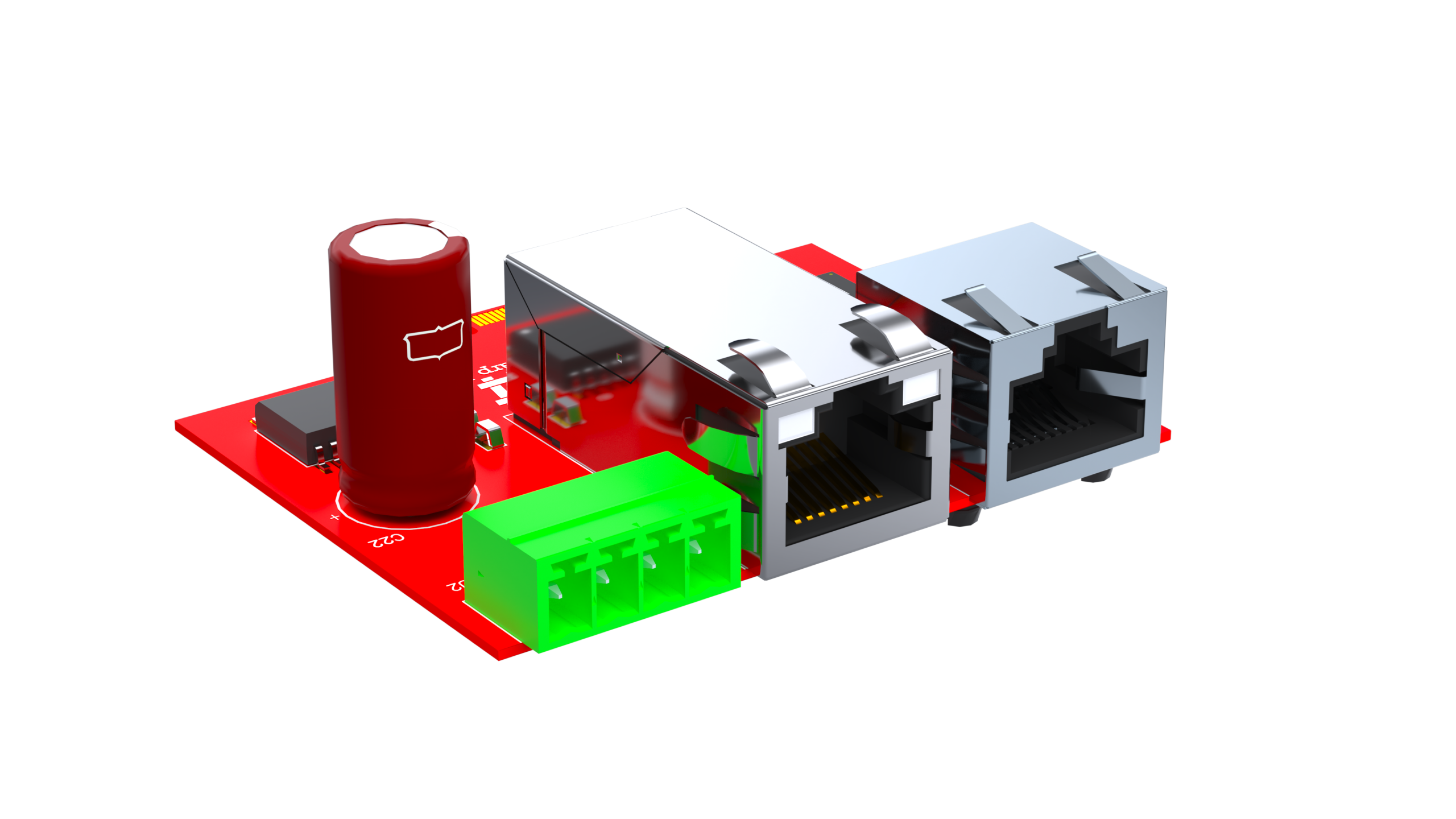
Mini-PSU
N-Top module for the Accordion test system — two buck-boost channels, 0–24 V at 1.5 A each, fully programmable over I²C.
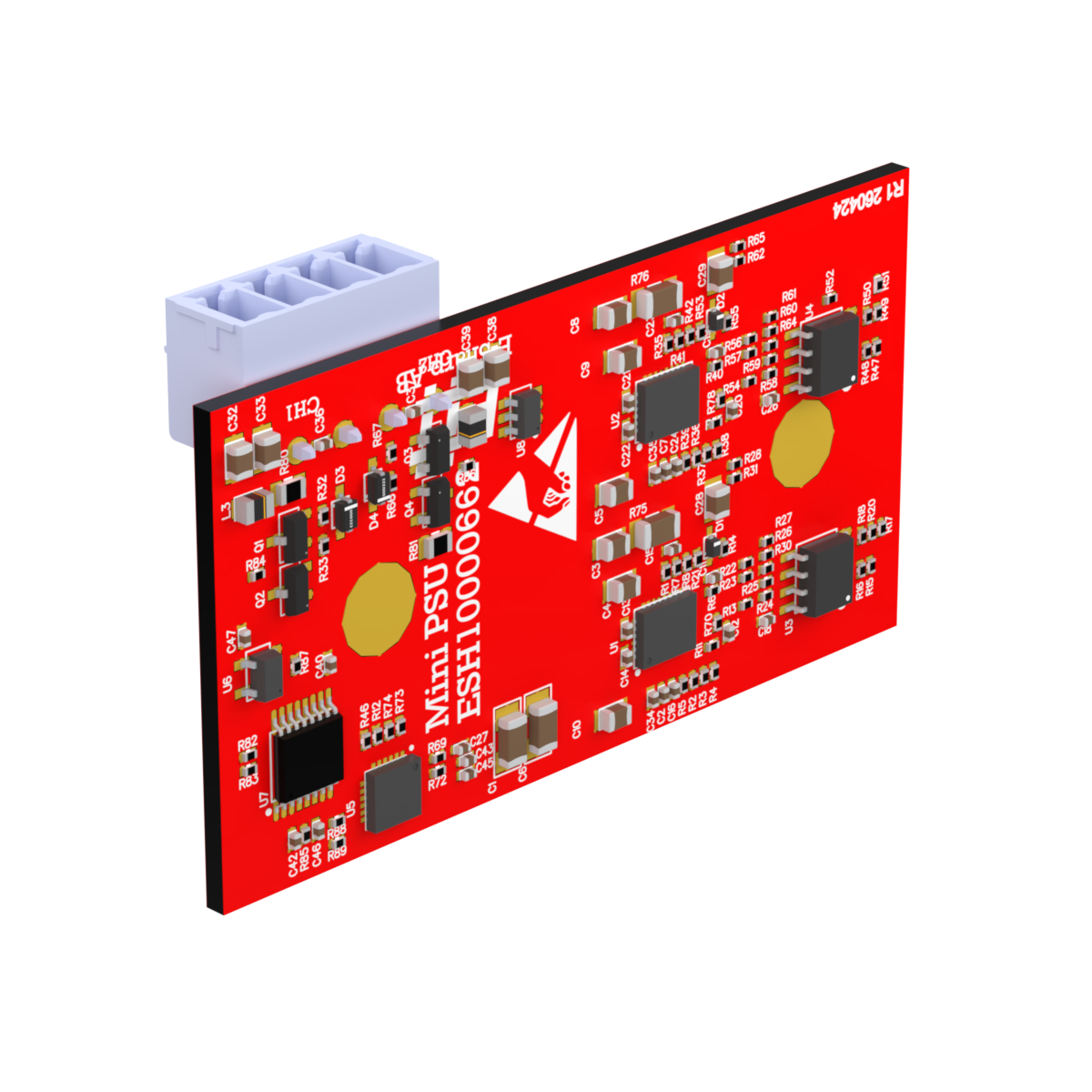
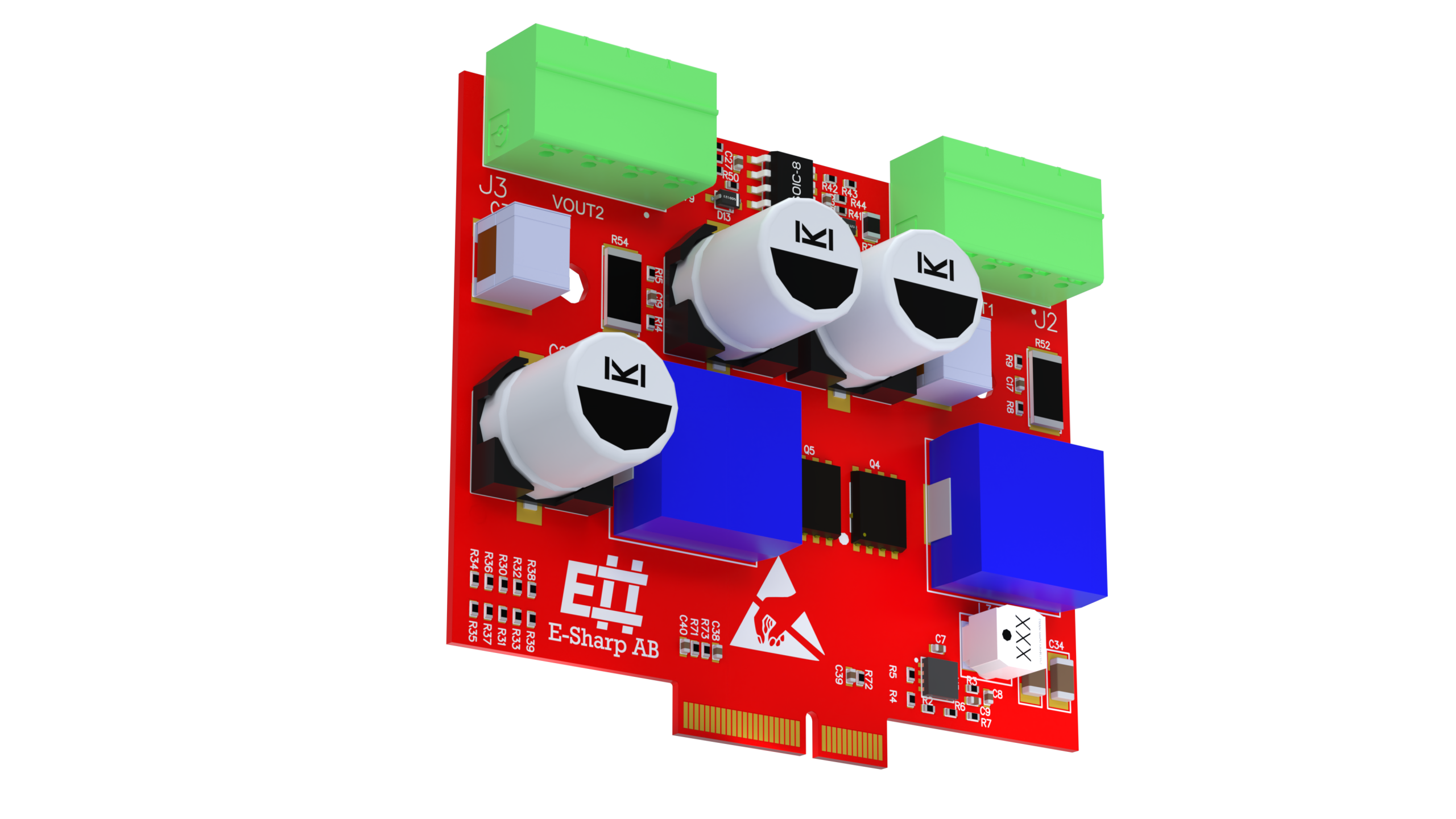
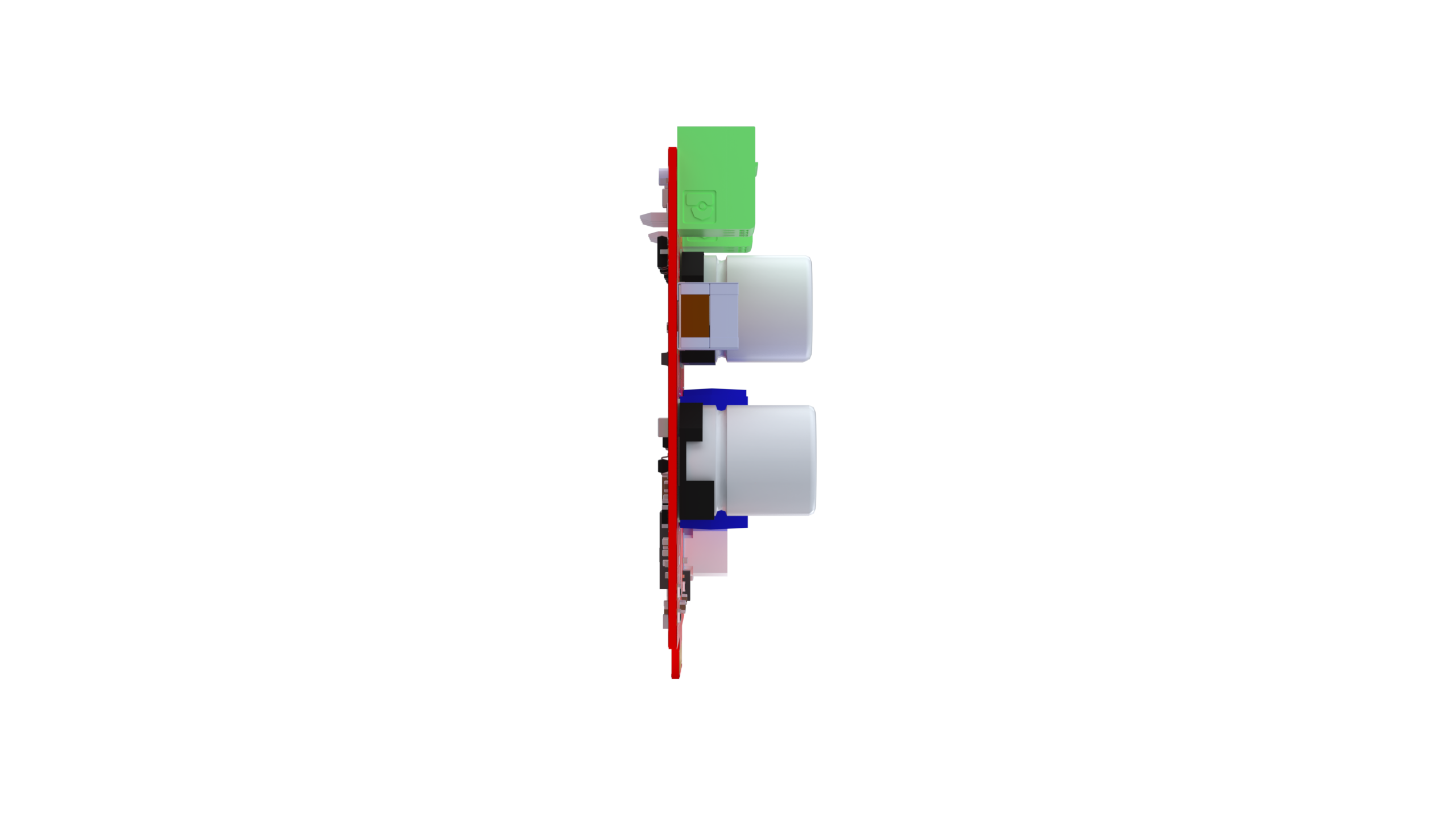
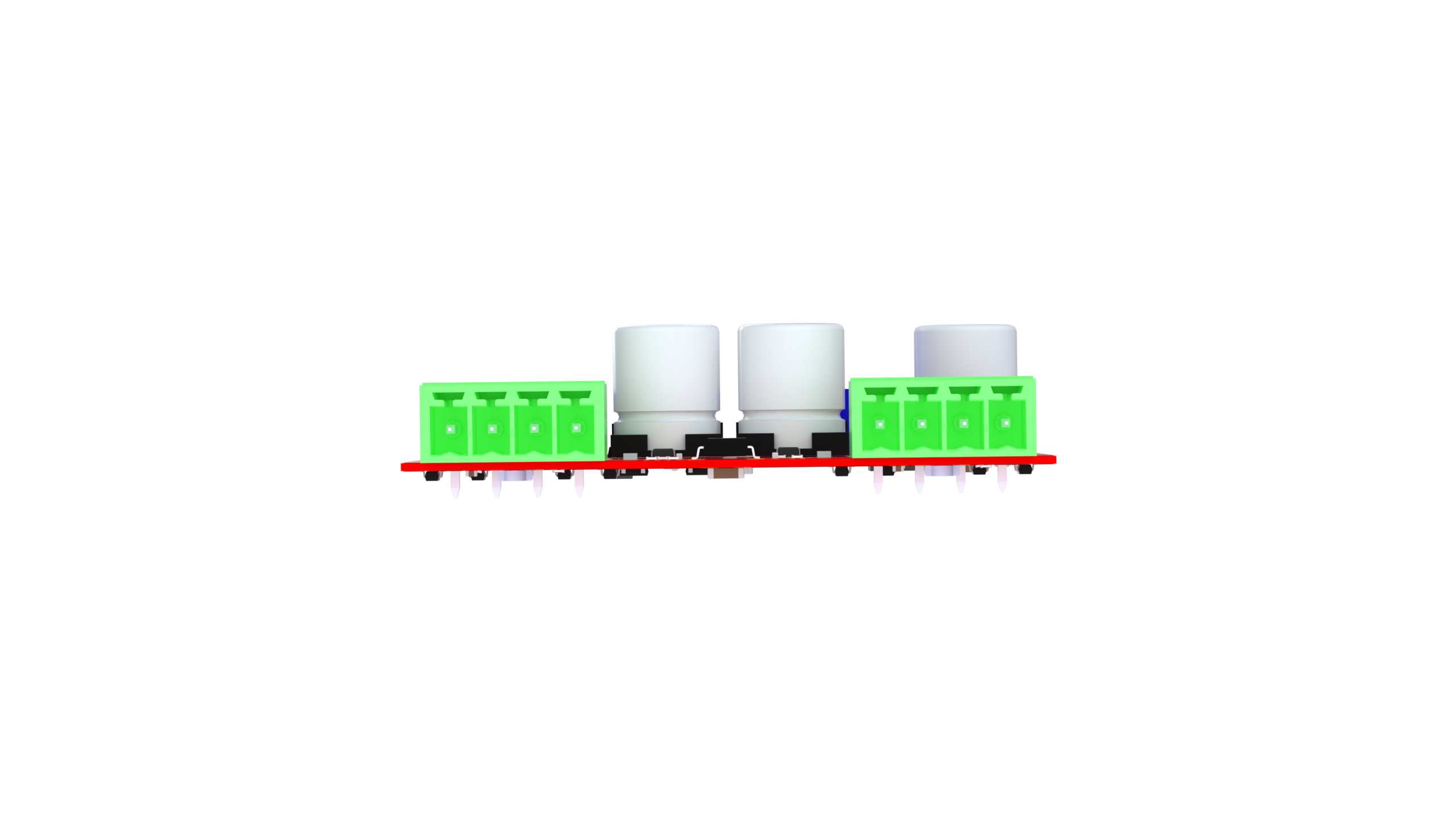
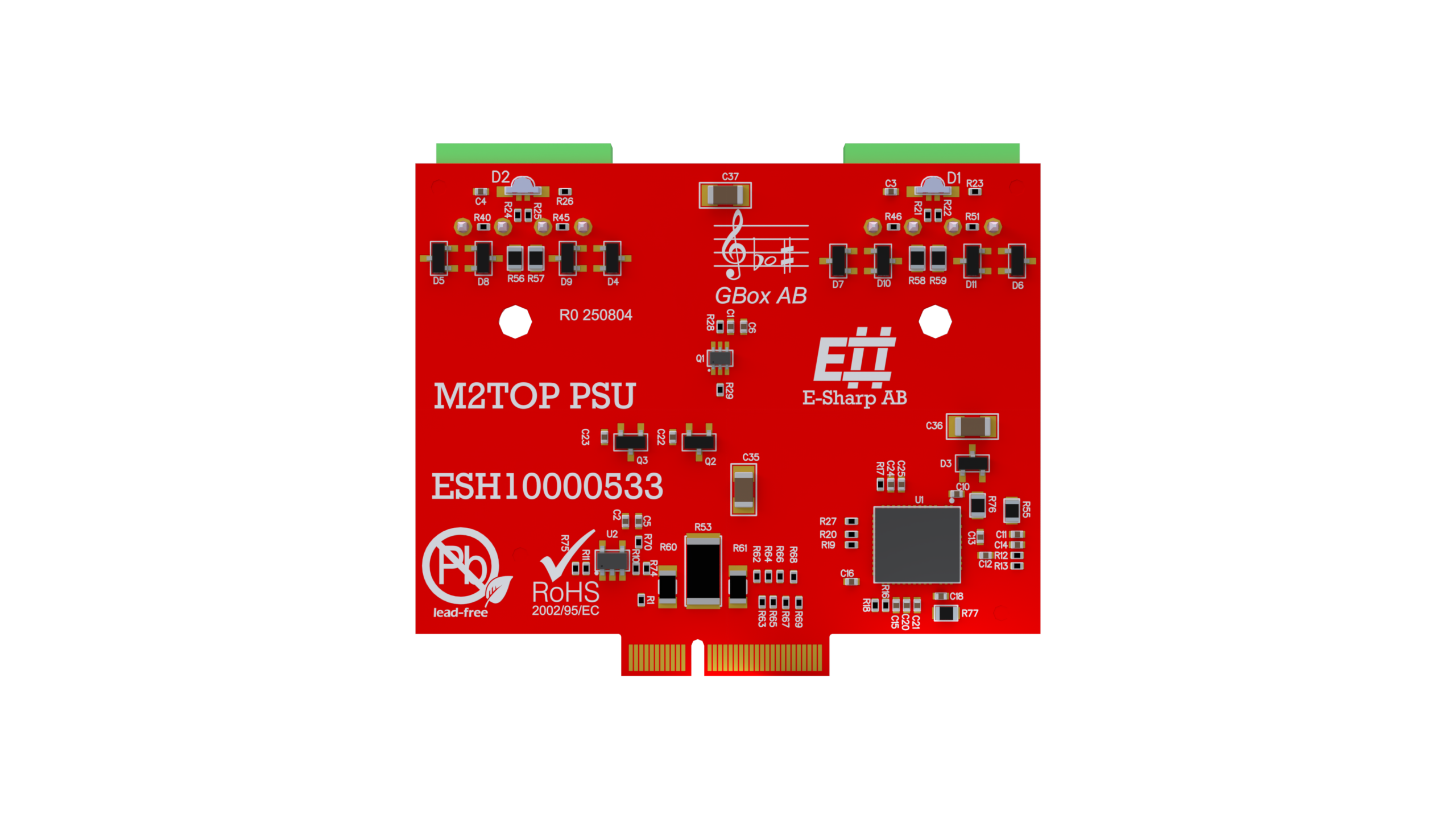
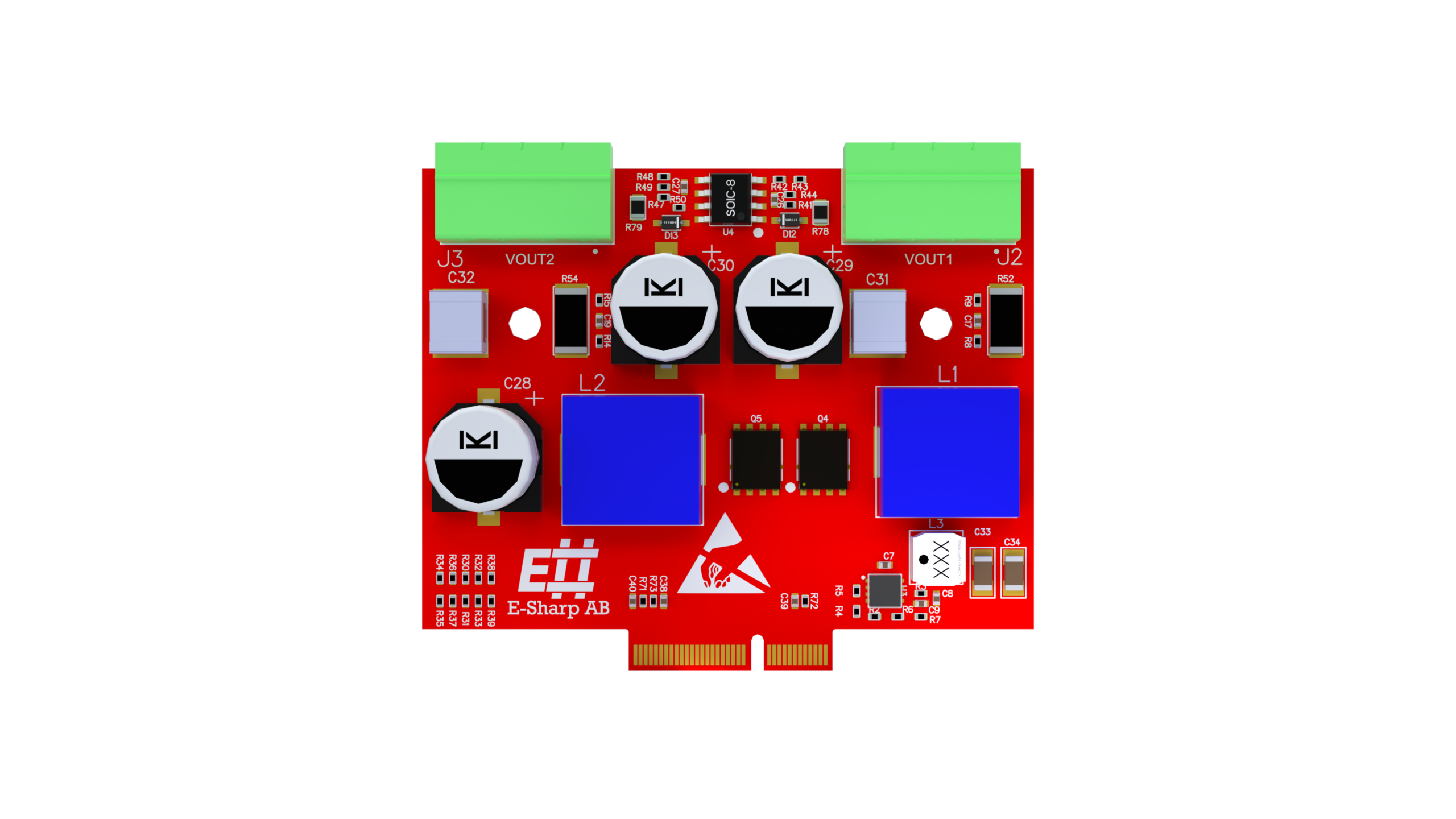

The PSU M.2 Module is a programmable dual-channel DC/DC supply that plugs into the Accordion test system through the standard M.2 connector. It replaces a stack of external bench supplies with one module that is controlled, monitored, and calibrated entirely from your test software — no jumpers, no trimmers, no manual intervention.
Both channels are fully independent. Each one has its own setpoint, its own load profile, and its own protection thresholds, and both are driven from the same test script. Margin testing happens in code: write a new VOUT_COMMAND, enable the channel, read back the telemetry — all from the test framework.
Per-channel telemetry covers output voltage, current, and power, plus input voltage and current and module temperature, sampled at the resolution the LTC3889 provides. The same module that powers the device under test also gives you the diagnostic data when something goes wrong.
Protection is configurable per channel for over- and undervoltage, overcurrent, over- and undertemperature, and startup timing (TON_MAX). Warning and fault thresholds are set in software, so the test sequence — not the operator — decides how to react to a misbehaving DUT.
The PSU M.2 Module is designed to sit inside an Accordion test system and is controlled through the Accordion API from C#, Python, or TestStand. Every PMBus register is exposed as a named channel using the convention {ModuleIndex}.ESH10000533.{Address}.{Channel}, so a test step can read or write any register without writing low-level PMBus code.
Calibration is held on-module and persists across power cycles. Per-channel current sense gain, temperature coefficient, and input current calibration are applied automatically at startup, so a calibrated module behaves identically the next time it boots.
The complete electrical specifications, protection thresholds, telemetry register map, integration examples, calibration procedure, and pinout are in the E-Sharp help center: ESH10000533 — M.2 PSU Module.
The complete electrical specifications, protection thresholds, telemetry register map, integration examples, calibration procedure, and pinout are in the E-Sharp help center: ESH10000533 — M.2 PSU Module.